Wednesday, 8 October 2014

MODULE REFLECTION

LAST THOUGHTS

So guys, the time has come. This is will be my final post on this blog. It’s been quite a journey with a lot of self-discovery and memorable experiences along the way. Like I said in a previous post (Forced Connection-II), this module has possibly impacted me the most as I genuinely enjoyed the assignments and yearned to express myself. Creative thinking in my opinion is the core module in our syllabus as we apply everything we learn in every other module.

Most importantly, it allowed me to be my crazy self, surrounded by people who supported me rather than those who put me down. Artists or free thinkers often find themselves in a negative environment where creativity isn't always appreciated. I'm glad I didn't have to deal with that. 

In fact, I found the courage to socialise and be confident in my approach through the introductory exercises. I used to be extremely inward and introverted when I first got here, but now creative thinking has helped me meet some amazing and charismatic people who I know I will cherish forever. Beside the module in itself, my lecturer, Ms. Ho Hui May has been a key component of my positive experience. She has been supportive and approachable throughout the term and she delivers an unbiased judgement when solving a problem. I feel extremely grateful for everything Ms. Ho has taught me this term. I will definitely carry on what I've learnt in this module for my future (and I'm not just saying that).  

Ciao for now my friends.


Thank you,
Samyuktha Chandar 


FORCED CONNECTION-III

OBJECTS AND EMOTIONS

This week's task was to select an object and illustrate it to convey a set of 12 emotions- Compassionate,dull, happy, sad, cowardly, brave, greedy, gracious, lazy, hardworking, creative and unimaginative. The object I chose was a clock. 

This assignment was quite intriguing as it helped us unleash our 'goofy' side and let us realise the way we perceive certain emotions and feelings. My approach to this exercise was to use the hands of the clock as a mouth or to use them as actual hands. All in all, this was a fun and upbeat assignment that helped me escape all the stress of assessment week which seems to come ever closer. This assignment happens to be our last, so it definitely holds a special place in my memory. 


Thank you,
Samyuktha Chandar

FORCED CONNECTION-II

FUN WITH FLOSS

The assignment given to us was to come up with different ways to make flossing fun.
I'll admit that I NEVER floss because I'm lazy (stop judging me), so this exercise had me a bit stuck. We sat in groups and discussed the topic at hand. The group consisted of Pauline, Rita, Xiaolin and Sayidah. We were a little slow with the flow of ideas but as we started embracing the topic more, we got better.

We incorporated quite a few methods, some possible, others not so much. We had fun working on this project as we got to stretch our imagination beyond the realms of reality and play with infinite possibilities. That's really why I love creative thinking. 
I've learnt to never be content with limitations and rules as they only hinder our imagination. This module as a whole has let me open up and explore my mind which is something I never really had an opportunity to do. And for that I'm thankful.


Thank you,
Samyuktha Chandar

FORCED CONNECTION-I

CHEFS FOR A DAY

This week's assignment was all about experimentation. We were given a set of foods that we all eat on a regular basis and we were asked to create a few dishes by mixing two or more of them together. There were absolutely no rules when it came to creating our delectable (haha not really) masterpiece. 

We got to work mixing and matching, trying to come up with the craziest and most outrageous combinations. I personally tried to come up with the grossest dishes ever. 
It was quite nasty.. I created the following dishes:

Bao filled with egg and masala chicken (sounds pretty good actually)
Broccoli and bell pepper flavoured lays (oh god..)
Bacon and stake with ice cream (hmm doesn't sound ALL that bad)
Ice cream with chilli and tomato ketchup in it (am I pushing it?)
And finally Cappucino with mashed potato melted in it 

Of course we had to illustrate all our ideas so everyone's creations looked colourful and crazy! 

I had so much fun working on this project as it let us run away with our imagination and enjoy boundless freedom creatively. We were also told not to disregard any dish as who know? It may become a delicacy in the future. 

Then we were asked to think about any weird dish that we enjoy. I have a really good one for this- Yoghurt and bacon. Yeah i know it sounds super weird but it tastes so amazing. Give it a chance and tell me I'm wrong.


Thank you,
Samyuktha Chandar

Wednesday, 1 October 2014

ANALOGICAL THINKING-II

THE BOTTLE OF OXYGEN

This week's assignment was to design a poster to advertise a bottle of oxygen by Coca Cola. The group consisted of Pauline, Rita, Xiaolin and me. We started out by making a personal analogy of oxygen which basically means that we tried to visualise oxygen's point of view and evaluate it's use.
We put down words like life-giving, essential and pure.
Then we had to choose our demographic, the price range, the design and the general vibe of the poster.
Our group decided to target the elderly consumers and make the product expensive. The reason being that oxygen is essential for survival and many elderly individuals need help breathing, so they will be willing to pay any amount of money if it means that they can breathe with ease. This decision was strictly from a business point of view focusing on the profits for the company (Coca Cola).
As for the design of the bottle, we made it look like the earth as our planet depends on oxygen to support life (as well as the atmosphere but yeah). We decided to name it as well- insuffler la vie which means 'breathe life' in French. There are depressions on the sides of the bottle that make it easy to grip. The bottle is made of glass and has an outlet at the top in the form of a capillary tube that can be attached to any IV instantly.  Its a fool-proof design that's simplistic and elegant. We believe that this will appeal to our demographic of choice.
The slogan for the campaign is 'Revitalise Your Life'. In keeping with the theme, we went for subtle and light colours.

All in all this assignment was a very educational experience as we realised that there is a lot that goes into advertising a certain product. There are a lot of aspects of it that need to be taken into careful consideration in order to draw the consumers in and convince them that the product is worth investing in. To conclude, this project taught me a lot about consumerism and creative advertising.


Thank You, 
Samyuktha Chandar

Saturday, 20 September 2014

ANALOGICAL THINKING-II

SYMBOLIC SELF PORTRAIT

This assignment was definitely on my list of favourites because it involved depicting ourselves using symbols and objects that best describe our personality and interests.

I got right to work as i already knew what i was going to incorporate into the portrait- Music, ballet, swimming, coffee, art and dogs.

I have this mad love for 70's rock-be it psychedelic or hard rock so I simply HAD to incorporate the Rolling Stones logo as well as the album art for Pink Floyd's 'Dark Side of the Moon'. It was convenient that the RS logo was a pair of lips so it fit right on my face. The famous dispersion of white light through the prism(FLOYD) made up my eye balls. An upside down Starbucks Venti mocha gave me a nose and two little puppies made my eyebrows. My cheekbones were accentuated by a paint brush and a pen as I love to paint and write. My neck was made up of musical notes. The most prominent part of the picture is most probably my hair. One side of it is made up of water with swimming equipment floating in it (swim suits, caps, goggles, flippers etc) and the other side is made up of my pointe shoes that I use in ballet. The shoes make up the roots of my hair and the laces make up the body.

Overall I think my portrait conveys everything one might need to know about me in terms of my passion, my hobbies and my taste. This exercise was very creatively stimulating and made us really think about how we could project ourselves in the simplest way possible.


Thank You,
Samyuktha Chandar


EXPLORING PAREIDOLIA

Pareidolia is formally defined as a psychological phenomenon involving a vague and random stimulus(often an image or a sound) being perceived as significant.
This week we decided to focus on finding faces in our environment. We were instructed to walk around the school grounds and try to take pictures of as many faces as we see.

It was definitely a very interesting assignment and I thought that the presentation of our pictures was the best part as all of us got to understand how our fellow classmates perceive things around them. Every group had a unique way of spotting faces. This task definitely tested our creativity because everyone was trying to think outside the box and really put their powers of perception to the test.

It's funny because I never really thought about the concept of pareidolia too much before I was informed about it. It was something that i would automatically do as it is a human instinct but I didn't pay any attention to it. It's amazing how many faces you see when you really want to. That is why the human brain amazes me so much. There are so many creative avenues we don't bother venturing down. But once we do, there's no turning back. Your mind is open to a whole new world.

Pareidolia definitely enhanced my perception of my surroundings.


yawning

The exasperated locker

The monster

starstruck

The horrified locker

Camera reacting to a scandal it witnessed

Cheshire cat of jewellery
Shouting


Thank You,
Samyuktha Chandar

Sunday, 7 September 2014

4 LESSONS IN CREATIVITY

This week's assignments was one of my favourites as it entailed doing something i love more than anything else- watching a TED video. I spent an entire summer watching as many TED videos as i could because they're mind blowing and informative.
The talk we had to watch was on creativity delivered by Julie Burnstein. I sat down to watch and was thoroughly engrossed for every single second of the 17 minutes and 20 seconds that she spoke.
Julie Burnstein spoke about how imperfection is the basis of creativity and that the key component is to 'let go'. Let go of fear, let go of reality, let go of boundaries.
She proposed that there are 4 aspects to embracing our creativity:

The first is paying attention to our surroundings. Creativity blossoms from really observing and analysing everything around us. In time, we can tune our minds to perpetually be perceptive to the smallest things.
The second aspect is embracing the difficulties and obstacles in our lives by trying to learn from them rather than overcome them. Trying to fight our way through everything is not always the answer. She stated that some artists believe that they're best works come out of parts of their life that are most difficult. Their problems made them think, which in turn led to creativity.
The third embrace is experience. Experiences can be of all kinds, but eventually they all go on record to impact us in some way. An observation, an action, a melody- anything and everything can make us experience something. In order to be creative we need to use the experiences that enhance our creativity and 'let go' of the experiences that hold us back. This also requires acceptance and change which are hard at first but turn out to be for the best.
The fourth and final embrace is loss. Loss is something we all have to endure in some form or another. This aspect is probably the hardest for one to wrap one's head around as it is emotionally challenging. But it's important to know that loss is a part of life and we can choose to either let it tear us apart or make something of it. Beauty can be seen in the wake of devastation and destruction. Wounds will heal over time and leave nothing but a memory. Artists and other creative thinkers choose to immortalise these wounds through their work to remind us of the suffering we've had to undergo to get where we are now.
She concluded her speech by sighting an example of a Japanese tea bowl made hundreds of years ago that cracked. Someone decided to put the bowl back together but in the process he emphasised the cracks using gold laquer. Now the bowl looks even better than it did before. What we learn from this is that imperfection isn't something to detest but embrace instead.


Thank you,
Samyuktha Chandar

Wednesday, 3 September 2014

RULES ARE MEANT TO BE BROKEN

This week's post is all about architects who broke the rules and dared to think outside the box. The three architects I have chosen are: Frank Lloyd Wright, Zaha Hadid and Antonio Gaudi.
Each one of them has something unique to offer to the field and all of them are brilliant is their own right.
Being the child of two architects, my parents have exposed my brother (who is also an architect) and I to a lot of these great's works. From a very young age, I learnt to appreciate them and understand the magnitude of their genius.
So lets get down to it.

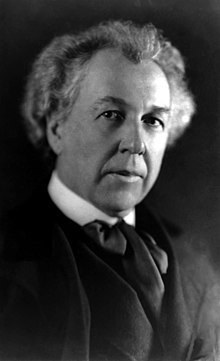
FRANK LLOYD WRIGHT
Frank Lloyd Wright LC-USZ62-36384.jpg
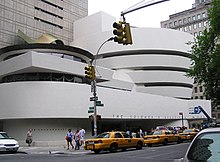
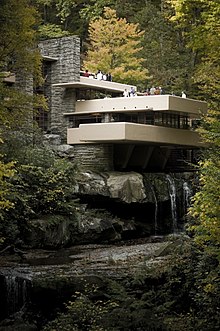
Frank Lloyd Wright is regarded as one of the greatest architects of all time. He designed some of the most iconic buildings that convey his true genius. A few of his best works include the Kauffman House or 'Falling Water'and the Guggenheim museum in New York. The predominant reason for his fame is because his designs are unconventional and innovative. A good example of this is the filling station he designed in 1927 (Michigan) that has been opened for use recently. It's the most unlikely design for a gas station but it's a work of pure genius. 
Guggenheim Museum
The falling water house
        
It is well known that Frank Lloyd Wright was the inspiration for the protagonist, Howard Roark in the best selling novel Fountainhead by Ayn Rand. Roark was portrayed as a brooding architect who didn't like being limited by the boundaries and rules set down by architecture schools on how to design. He got expelled and tried to prove that architects can be daring and outrageous with their designs. There are many similarities to Frank Lloyd Wright who designed as he saw fit and never conformed to 'rules' or 'restrictions'. 

To conclude, Frank Lloyd Wright was a pioneer of free thinking and innovation in the field of architecture. He always was and will be my inspiration. (P.S. I have a 'make it yourself' Lego model of the Imperial Hotel)
The lego model

ZAHA HADID
Zaha hadid - Flickr - Knight Foundation.jpg
Rosanthal Centre 
Zaha Hadid is widely regarded as the first famous female architect. She proved herself in a profession greatly dominated by men. Her most notable projects include the Rosenthal Centre for Contemporary Arts in Cincinatti, the Phaeno Science Centre in Wolfsburg, Germany and the Bridge Pavillion in Spain. She is known for her "neofuturistic" designs using "multiple perspective points and fragmented geometry to portray he chaos in modern life".
Phaeno Science centre
At first, her designs were disregarded as too ambitious. People were skeptical of this woman who proposed such radical ideas. But she went ahead with her plans and ended up winning a Pritzker Prize (the equivalent of a Nobel Prize in the field of architecture) for her efforts. She was the first woman and Muslim to accept the prestigious award.
She has won numerous other awards for her projects all of which are a treat to behold. 
Bridge Pavillion
Her designs break away from the boring conventional construction we see today. She isn't afraid to break barriers and step outside her comfort zone. In my opinion, these are the qualities that make a true genius. I have nothing but respect and admiration for Ms. Hadid who has solidified a woman's place in the field of architecture.  

ANTONIO GAUDI
Antoni Gaudi 1878.jpg
Antonio Gaudi was a famous Spanish architect who was known for his mosaic work on numerous buildings in Spain. Gaudi warped and twisted his buildings so much that many architects today wonder how he hand drew the plans for his projects. It seems nearly impossible to manually draft such complex and complicated designs, but Gaudi managed it somehow. 
Casa Batllo
Casa Mila
 Initially, Gaudi's buildings were considered to be in poor taste as people couldn't wrap their heads around his curved and rounded designs. But as he continued to work on more projects, his critics began to realise that this man was in fact a genius. When one looks at his buildings closely, the level of intricacy becomes evident. His mosaics are insanely famous and it's truly a wonder how he produced the final product with such perfection in that day and age. I've had the amazing opportunity to see his works up close and it was truly a treat. 
Parc Guell
The Trencadis lizard
To conclude, these three architects are my role models and I've grown up admiring their work. They were/are fearless because they believed in themselves and had faith in their design despite the naysayers. 

Thank you,
Samyuktha Chandar


Tuesday, 2 September 2014

THE MARSHMALLOW CHALLENGE

Last week, the students of VA1H were presented with a challenge- to build the tallest structure possible using uncooked spaghetti, a marshmallow and a brown paper bag. The materials used for binding were sealing tape and string. We had 20 minutes to complete our mission. My group consisted of Pauline, Rita, Xiaolin and of course, me. As soon as the timer started, every group (of 4) began frantically discussing how to go about this strange yet fascinating task.

Our group started by putting down the criteria in order of priority for our model. We decided that stability trumped height as keeping the model erect was important. We got to work immediately by making a pyramidal structure which would make for a strong foundation. We then kept increasing the height by tying/taping spaghetti vertically upwards. We then decided to stick a few strands into the paper bag and pierce the top. This was a daring move because the paper bag proved to be heavier than we thought. We taped it to the existing structure and stuck the marshmallow on top. It took a lot of tape and string to secure the model but we finally managed to keep it standing up. 

This project really tested our imagination, team work and perseverance. With respect to being creative, we really tried to make our model resemble a man (refer pictures attached below). In terms of team work, we discussed our strategy and ideas as a group and welcomed every suggestion and critique. We divided our work amongst the four of us and found ourselves working like a well oiled machine. This project does take some amount of perseverance as there is a good chance that the first attempt will fail. The key is to not give up, keep making changes as you proceed and basically 'go with the flow'. 

Although our model wasn't the tallest, we came a close second. To conclude, I thought this assignment was a fun and enjoyable way of teaching us a core lesson about thinking outside the box but being practical at the same time because we have to execute our ideas and make it work. 

Thank you,
Samyuktha Chandar
Stabilising our man

Clicking away

Last minute adjustments

Say hello to Steve. 

Saturday, 9 August 2014

THE FREE THINKERS


So this week's assignment is all about artists who broke the 'rules'. 'Rules' in this context refers to what society deemed appropriate in the art scene during a certain era/time period. The three artists whom i have chosen to blog about blatantly ignored these rules and received a lot of shade from art critics and enthusiasts. But with changing times, people took a step back and realised that these artists were in fact ahead of their time and were creative geniuses in their own right.

So here goes,

 PABLO PICASSO

This insanely famous Spanish artist is widely credited for the invention of the painting technique referred to as 'CUBISM'. Cubsim incorporates the use of geometric forms such that the viewer feels like he/she is looking at the two dimentional painting from every angle, thus making the subject seem three dimensional. Picasso first exhibited this technique in a painting of 5 woman who looked distorted and disproportionate. He had tried to paint them from more than one angle at a time.
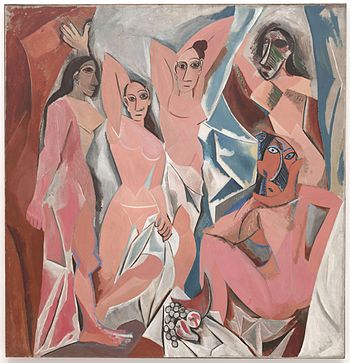
Les Demoiselles d'Avignon.jpg

Les Demoiselles D’Avignon

The public did not take too kindly to his representation of the female body. In an age when portraits and landscapes were what society considered tasteful, this was almost an insult to their ideologies and beliefs. They were highly critical of Picasso and claimed that he was making a mockery of art itself. This opinion of his art persisted well into the 20th century till abstracts came into being. At this point, people realised that Picasso's painting was in fact a stroke of genius. In this way, Picasso paved the way for abstraction in art which he will always be remembered for.


M. F. HUSSAIN

Maqbool Fida Hussain, a Muslim painter born in India was famous for his paintings of Hindu Gods and Goddesses. His paintings were quite controversial as he saw the Gods and Goddesses as 'visual stimuli instead of deities'. As a result, his work would often incorporate them nude and in suggestive poses. He meant for his paintings to portray the beauty and sensuality of Hindu Goddesses, but orthodox Hindus did not appreciate their deities being represented like that.

 He was victim to a lot of criticism and hate. A magazine published one of his paintings and called him a 'butcher' of religion. Further more, being Muslim did not help his case. People believed that he did not have the right to paint Gods of another religion as he pleased. He was later banished from the country and he migrated to Bangladesh where he continued to paint. He died in 2011 at the age of 95. Even though some people are still of the opinion that his motives were impure, there are many who realised what his true mission was.
  

Hussain also loved to paint horses as they were the ideal representation of strength, beauty and grace. I have personally visited Mr. Hussain at one of his galleries in Chennai and I was in awe of his work. He inspired me so much and my own art is majorly inspired by his strokes and lines. 


VINCENT VAN GOGH
Van Gogh was a Dutch painter who has been regarded as one of the most famous painters of all time. But this wasn't the case when he was alive. In a time when impressionism was everything, his paintings attracted little or no attention due to their somber tones. As a person, Van Gogh was very contained, so he always found it hard to express himself through his paintings. He always used earthy and deep colours which were not what society appreciated. Some of his most famous paintings are 'The Sunflower', 'The Scream', his self potraits before and after he chopped off his ear lobe and of course 'Starry Night'. Starry Night really shows off Van Gogh's unique strokes that are curved and 'swirly'. It is a true masterpiece.
 After Van Gogh died, his works became hugely famous and people began to understand and relate to his paintings which brought him up to the status he withholds today in the art world.


Thank you,
Samyuktha Chandar


Bibliography:
http://www.vangoghgallery.com/misc/overview.html
http://en.wikipedia.org/wiki/M._F._Husain
http://www.teenink.com/nonfiction/academic/article/306756/A-Retrospect-of-How-Pablo-Picasso-Changed-the-World/

Sunday, 3 August 2014

BRAINSTORMING

Our assignment for the week was to form groups of three and think of 100 ways to perform seemingly random tasks. Some were quite bizarre though, which only made it that much more entertaining to think about. My group consisted of Sayidah and Xiaolin.
Our group picked the following three topics:
How to squeeze a lemon
How to kill the paperman
How to cross a road

As we got passed the first 20 suggestions in each topic, we realised that we really had to stretch our imagination and think of the most ludicrous and absurd ways to achieve the tasks at hand. We ended up laughing a lot through the course of the exercise as some of the ideas were downright hilarious. It was fun as well as educational and it made us realise that our imagination is quite limitless and there are always infinite solutions to every problem. All it takes is for one to open one's mind and unleash one's inner creativity.

The best part of this assignment was that no suggestion is wrong. Anything goes.
As art students, this was a dream come true.

To conclude, I think this exercise really opened my eyes to see things differently and always think outside the box.

Thank you,
Samyuktha Chandar
Yida (left), me and Sherry (right)